
5 Reasons Not to Miss Alma Katsu’s Session on Generative AI
When: Saturday September 20, 2025
What: “AI For Writers”
Where: Online. Attend Future U, Brought to you by the San Diego Writers Festival
By Wendy Wong
Reason #5 Generative AI (“GenAI”) is the most hyped technology in history. There is a lot of disinformation about AI. Learn what it is, and what it isn’t, and get the story behind the hype. Know how it’s impacting some major industries.
The biggest tech companies in America are competing to be the next dominant player in AI. There is a lot of money and profit at stake, and these companies are not necessarily telling you the truth about AI. These are for-profit companies not motivated by what AI will do to humanity or society. They’re in it for the profit. They want you to believe that AI is far more accurate and intelligent than it actually is. “For example, we are very far from the Jetsons’ Rosie the Robot being a sentient intelligence,” she says.
Katsu will break down the categories of computer capabilities necessary for artificial intelligence, and discuss how OpenAI’s new approach to Natural Language Processing changed the game. She will give you a behind-the-scenes look at the enormous data sets being used, and the implications for society, not least of which is the outsized energy needs of GenAI.
“Yet it is being used by ordinary people for whimsical, mundane tasks like, say, generating five names for their pets, which they can easily do on their own,” Katsu says.
From an industry trends perspective, Katsu will share how libraries and the movie industry are applying AI.
Reason #4 Learn about the history of AI and how it evolved.
We’re all familiar with the term “GenAI”, but most people don’t know where it came from or how it works. Katsu will give a primer on GenAI—which has origins reaching back to the 1950s—for the layman. Most importantly, she will provide context: how Large Language Models (LLMs) evolved, how they’re trained, and how they’ve changed in just a few short years.
This is essential knowledge for the public to be informed about, so that we can each make informed and judicious choices about how and when to use AI.
Reason #3 What is the impact of AI on Copyright? And what do authors especially need to know?
Katsu describes how the breakthrough LLM, GPT-3, was trained on datasets comprised of Internet scraping and two datasets of pirated books.
“Think back to the early days of Napster, the infamous torrent site for pirated songs. If you were an author in the 2010s, your books pirated in this exact same way. Back then, we filled out take-down orders through your publishers and wondered if anything would come of it. Well, those pirated books are the same ones that companies like OpenAI and META used in their LLMs.”
Today, authors are part of class-action suits against these companies to try to wrestle back our rights and uphold the principle of copyright.
Reason #2 What you don’t know about generative AI can hurt you.
“I keep generative AI out of all my work,” Katsu says. “AI tools are becoming so embedded that you actually have to turn them off to keep them out of your work, and I do.”
Why? “Because AI is not as accurate as these large companies would like you to believe,” Katsu cautions. “It hallucinates. It makes things up. Even if you check all your results and your sources, AI has been known to fabricate its sources, even whole articles that never existed.”
The problem is growing. The Atlantic magazine recently reported a rise in completely fabricated quotes and stories attributed to real people. It cites an example of where The Heat, a consumer magazine distributed by the Chicago Sun-Times, had published a list of recommended summer reading. The problem? It attributed non-existent books to real authors. The author of the piece for The Heat admitted that he’d used ChatGPT to draw up the list and didn’t bother to verify the results.
Katsu cautions writers against using AI for research. “You really have to check every result thoroughly and verify every source.”
Reason #1 What can you do as a citizen, as an author?
This is a session for laypeople, especially writers. Katsu wants to give people a practical, clear-eyed way for using AI. She hopes to educate the public so that the public can push the government to provide regulation of generative AI. This is a grassroots effort.
Authors should definitely join The Authors Guild, Katsu says, as it is on the forefront of filing class action lawsuits to protect authors from large AI companies’ misuse of copyrighted content.

Photo Credit: Matt Mendelsohn
About the Presenter: Alma Katsu has had a 35-year career in intelligence, as a technology forecaster, an analyst of emerging technologies and their biggest social impacts. She has worked as a futurist for the RAND Corporation, the U.S. Government, and the private sector. She has written numerous articles on generative AI. Katsu will be presenting a session entitled “AI For Writers” at Future U, on September 20, 2025, brought to you by the San Diego Writers Festival. Register here.
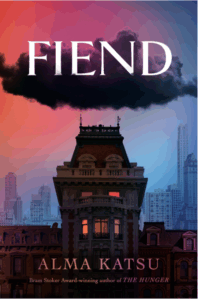
Katsu is also a novelist, having published nine novels. Her latest novel – Fiend – is due out September 16, 2025.
Pre-orders are available.
Her books have been nominated for and won multiple prestigious awards including the Stoker, Goodreads Readers Choice, International Thriller Writers, Locus Magazine, the Western Heritage Awards, Spain’s Celsius 232 festival, and appeared on numerous Best Books lists including NPR, the Observer, Barnes and Noble, Apple Books, Goodreads, and Amazon.
Wendy Wong is a certified Jungian coach who leverages the energy arts – Reiki, qigong, tai chi, shadow work, and dream analysis – for insight, creativity, healing, and growth. She writes fiction and narrative non-fiction, and is a staff writer for the San Diego Writers Festival and International Memoir Writers Association.
#
Callouts
“AI is not as accurate as these large companies would like you to believe,” Katsu cautions. “It hallucinates. It makes things up. Even if you check all your results and your sources, AI has been known to fabricate its sources, even whole articles that never existed.”
“AI is an enormous energy hog. Yet it is being used by ordinary people for tasks like generate five names for their pets, which they can do on their own,” Katsu says.
This is essential knowledge for the public to be informed about, so that we can each make informed and judicious choices about how and when to use AI.
Video Excerpts for Social Media
1:12-2:49 About the Future U session: It’s sort of a primer on generative AI….
3:55-5:45 Why Am I Qualified to Talk About AI?: “If you know me at all…private industry.”
14:23-17:20 “You have to be very thorough in checking the results…” [on fabricated sources]
17:36-18:00 “What’s happening is the data that AI is being trained on is being plowed back…” [on disinformation]